Output montage / 01:49 / Published 2026-04-21
This is ChatGPT Images 2.0
A materially rich output film: words appear on physical-looking surfaces, then museum, print, diagram, comic, editorial, and photo examples change rapidly. Device mockups show imagery, not a verified OpenAI app workflow in the inspected samples.
Useful to borrow
Keep a conceptual thread through varied formats. Show a useful artifact at its natural scale, and isolate one detail before returning to the whole.
Do not infer
This is not evidence for an app-screen animation recipe. Its dense result montage needs much slower adaptation beneath the user's narration.
16 shot groups.
Read across from the observed content to its treatment and possible adaptation. Enlarge the frame for detail.
Approximate study intervals; horizontal scrolling reveals all columns on small screens.
| Moment / source | Reference frame | What is on screen | Framing / edit | Useful adaptation |
|---|---|---|---|---|
| Shot group 01 ≈ 00:00–00:07 Output montageWatch from here ↗ | Sample 00:04.000 | Material typography Words and identity appear on changing textured and physical-looking surfaces. | Rapid texture and lettering changes; dense samples inspected. | A material title can work when it belongs to the presentation's identity. |
| Shot group 02 ≈ 00:07–00:19 Output montageWatch from here ↗ | Sample 00:12.000 | Museum / print imagery Photo stacks, a museum leaflet, and exhibition scenes create a visual premise. | Print-like borders and perspective alternate with full scenes. | Use one coherent visual world instead of random stock imagery. |
| Shot group 03 ≈ 00:19–00:24 Output montageWatch from here ↗ | Sample 00:22.000 | Diagram / notes A collage transitions into technical drawing pages. | Cut between arranged paper artifacts. | A diagram can make an abstract capability tangible. |
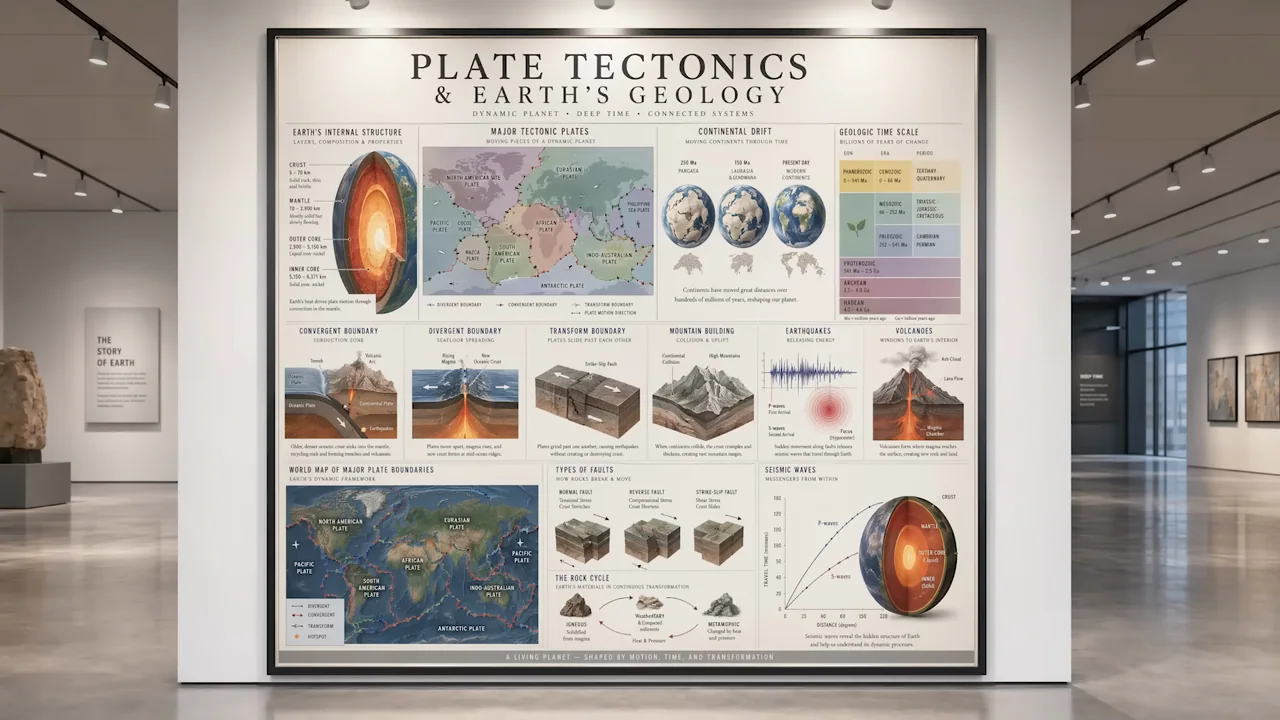
| Shot group 04 ≈ 00:24–00:28 Isolated outputWatch from here ↗ | Sample 00:26.000 | Infographic / chart Educational diagrams and a data chart fill the image. | Large output-only framing. | Treat the graphic as a result, not as application UI. |
| Shot group 05 ≈ 00:28–00:34 Output montageWatch from here ↗ | Sample 00:30.000 | Print / comic Clothing graphics, comic pages, and people imagery appear. | Cross-format result montage. | Keep format changes tied to a spoken point. |
| Shot group 06 ≈ 00:34–00:41 Output montageWatch from here ↗ | Sample 00:38.000 | Botanical / editorial Flower close-ups, notes, a laptop-displayed page, and botanical posters follow. | Detail-to-layout contrasts; laptop imagery lacks a demonstrated app workflow. | Do not infer interactive behavior from a device mockup. |
| Shot group 07 ≈ 00:41–00:48 Output montageWatch from here ↗ | Sample 00:44.000 | Educational layouts Scrapbook, migration map, and forest infographic examples vary the format. | Full compositions with dense printed information. | Choose one layout and hold it if the audience must read. |
| Shot group 08 ≈ 00:48–00:54 Isolated outputWatch from here ↗ | Sample 00:52.000 | Technical drawing Notebook geometry and aircraft studies are shown. | Paper textures and close detail. | Use detail crops to reveal craft in a result. |
| Shot group 09 ≈ 00:54–01:00 Output montageWatch from here ↗ | Sample 00:56.000 | Multilingual print Poster text changes language before menu examples. | Repeated layout makes the language variation legible. | Change one variable at a time in a comparison. |
| Shot group 10 ≈ 01:00–01:06 Isolated outputWatch from here ↗ | Sample 01:04.000 | Comic panels A full comic page leads to individual panel crops. | Whole-to-detail output framing. | Establish a composition before moving inside it. |
| Shot group 11 ≈ 01:06–01:12 Output montageWatch from here ↗ | Sample 01:10.000 | Editorial / planning Magazine and renovation-plan layouts show different document outputs. | Cover, spread, and plan as separate visual beats. | Use a finished artifact to close a feature explanation. |
| Shot group 12 ≈ 01:12–01:21 Output montageWatch from here ↗ | Sample 01:16.000 | Illustrated story Manga panels, a rendered scene, and a phone image extend one story. | Related characters carry across formats. | Continuity makes a format montage easier to follow. |
| Shot group 13 ≈ 01:21–01:28 Output montageWatch from here ↗ | Sample 01:24.000 | Book / material detail A book image becomes a close material study and another physical composition. | Scale changes around one visual subject. | Use a single purposeful detail reveal. |
| Shot group 14 ≈ 01:28–01:41 Output montageWatch from here ↗ | Sample 01:36.000 | Gallery / memory imagery Exhibitions, manuscripts, albums, and photo stacks form a fast closing run. | Many cuts; this row groups a montage, not a single shot. | Do not copy this density into an information-heavy segment. |
| Shot group 15 ≈ 01:41–01:47 Output montageWatch from here ↗ | Sample 01:44.000 | Material end cards Product identity reappears in several graphic formats. | Fast typography and texture sequence. | If used, keep end-card styling original. |
| Shot group 16 ≈ 01:47–01:49 Title / identityWatch from here ↗ | Sample 01:48.000 | End card The source mark resolves on white. | Static visual finish. | Provide an unmistakable end to the shared-screen presentation. |